SINDNOVA
Study and research centre on industry innovation and labour
VAT 02153791005
F.C. 97036220586
Address
via Tagliamento 9
00198 Rome (Italy)
Social
SINDNOVA
Study and research centre on industry innovation and labour
P.I. 02153791005
C.F. 97036220586
Address
Via Tagliamento 9 00198 Rome



ALL RIGHTS RESERVED © 2026

MEET. Towards a green and just transition of the metalworking sector: improving the involvement of EWC members in multinational companies
The MEET co-funded by European Commission and coordinate by Sindnova aims to promote the exchange and the wider dissemination of knowledge and good practices and to initiate actions aimed at supporting the establishment and good functioning of European works councils.The aim is to strength the competencies of EWCs members / workers representatives by the exercise of information, consultation and participation rights to make them capable of providing responses to new needs related to sustainability and transition.
Notably, effective social dialogue and democratic participation over on sustainable development, circular economy and energy saving in the workplace can only be achieved if EWCs members / workers’ representatives in different countries are adequately trained and get a deep knowledge of the national and European legislation in this field as well as the best practices performed by social partners at the national and transnational level. Information and training activities are thus prerequisites to harness the potential of sustainable development, circular economy and energy saving in workplaces and spur a more proactive attitude by labour representation on the matter.
This project will involve Multinational companies operating in metal sector, trade unions of metalworkers, EWCs’ members, and Research Institutes in different EU Member States and Candidate Countries: Italy, Spain, Hungary and Turkey.
The project MEET foreseen 4 events: a Workshop; a Round table; a Training Course; a European Conference.
The transnational dimension of the project MEET is guaranteed by the transnational composition of the consortium:
Coordinator: SINDNOVA
Beneficiaries: FIM-CISL (Italy), Fundación 1º de Mayo (Spain), TÜRK METAL SENDIKASI (Turkey), and VASAS (MET) Hungarian Metalworkers' Federation (Hungary).
Associate organizations: IndustriAll Europe, CC OO Industria.
MEET is funded by the European Union. Views and opinions expressed are however those of the authors only and do not necessarily reflect those of the European Union or the European Commission. Neither the European Union nor the granting authority can be held responsible for them.
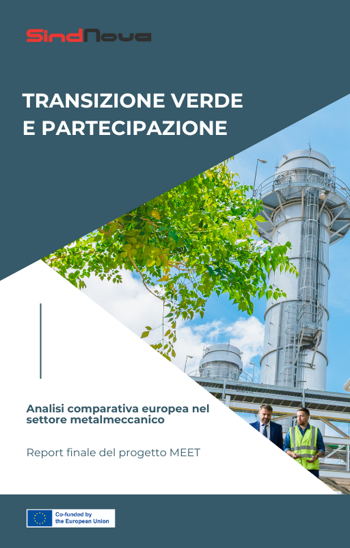
MEET Project Final Report
The publication analyzes how the European Green Deal is profoundly transforming the economy, production, and work, showing that sustainability is not just an environmental goal, but a field of social dialogue in which workers must have an active role. The new EU regulations – from CSRD to taxonomy, from CBAM to ETS – require greater transparency and integration of sustainability into business strategies, highlighting the importance of social dialogue capable of co-designing the transition.
Through advanced examples in Europe, the volume presents a model of anticipatory and “ecological” trade union participation, which contributes to sustainable planning and the protection of rights. Central is the role of European Works Councils, to be strengthened both at the regulatory level and through tools and training, as demonstrated by the experiences of the MEET project. The publication thus points to a concrete path for participatory and sustainable governance of ongoing transformations.
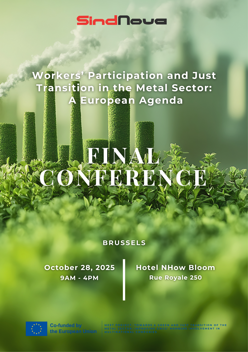
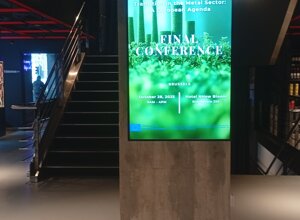
Brussels, October 2025. Final Conference
The Final Conference confirmed that the MEET project represented a concrete advancement in strengthening the role of European Works Councils (EWCs) in managing the green and just transition in the metalworking sector. The results show how strengthening skills, transnational dialogue, and the adoption of common tools are essential elements to effectively address the transformations of European production models.
The presentation of the final report highlighted the value of the European comparative analysis and the Green Rules, ten guiding rules that offer EWCs an operational framework to integrate sustainability and ESG principles into information, consultation, and dialogue processes with management. These tools have been recognized as a solid foundation to make the contribution of workers' representatives more structured, aware, and effective.
A central point of the conclusions was the call for continuity: participants shared the need to go beyond the duration of the project, concretely applying the results of MEET within their own organizations and strengthening stable cooperation among EWCs at the European level, aimed at a transition that is both sustainable and socially fair.
Within this framework fits the protocol developed by indNova for the creation of the Green Lab, recognized as an innovative and strategic tool. The model, structured as an internal Green Lab within the EWCs and a cross-company Green Lab, was identified as a fundamental lever to support the analysis of ESG policies, improve dialogue with management, promote continuous training on green and digital topics, and encourage the exchange of good practices between companies.
The conclusions of the Conference finally emphasized that the success of these tools depends on their formal recognition, the availability of adequate resources, access to ESG data, and the involvement of qualified expertise. Only in this way will EWCs be able to consolidate their role as central actors of participation, innovation, and sustainability governance in the European context.
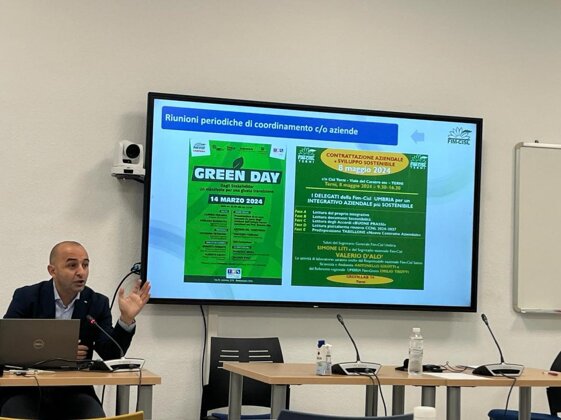
Budapest, May 2025.Training course
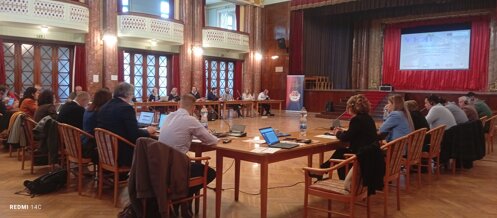
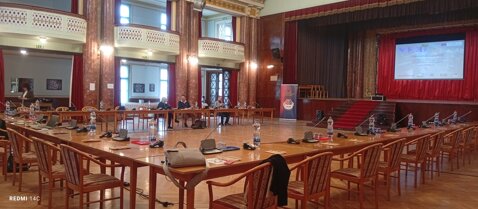
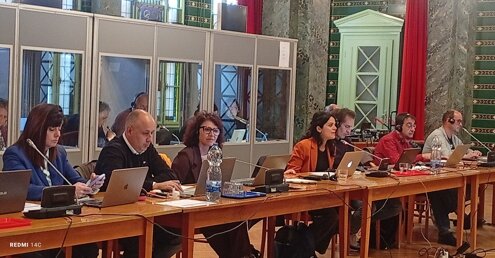
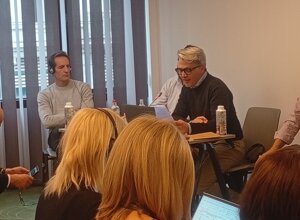
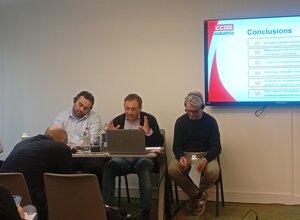
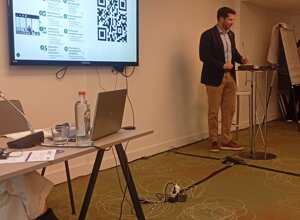
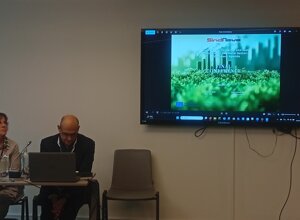
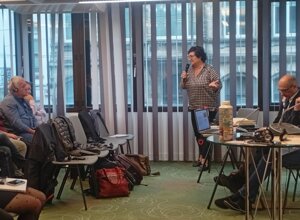
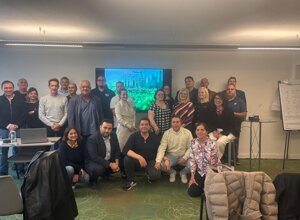
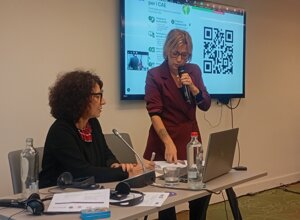
In Budapest, a training course took place in the framework of the European project MEET, coordinated by Mariangela Zito and Francesca Stanzani from Sindnova.The event focused on the role of European Works Councils (EWCs) in the processes of ecological and digital transition in the metal sector. One of the main objectives of the course was to analyse how European Works Councils can help to anticipate and manage the changes resulting from decarbonisation, transformations in the energy model, circular economy and digitalisation. During the training, participants had the opportunity to share their own experiences and gain insight into the workings of some transnational companies in Italy, Spain, Hungary and Turkey. A practical approach to better understand the different operating realities and learn from the different cultural and business contexts.Several working groups were created and dynamics of confrontation between members were put in place, with the aim of developing specific and in-depth skills. These skills are crucial to effectively support trade union action at both European and national levels. The context in which we operate is characterised by a major transformation in production, involving many companies and a large number of workers.
This phase of change requires up-to-date tools and skills to protect workers' rights and promote constructive dialogue between all parties involved. A significant moment was the presentation of the 10 Green Rules, union guidelines designed to actively promote the participation of workers and their representatives in managing change. These rules are designed to facilitate negotiation and prevent conflict on crucial issues such as decarbonisation, circularity, automation and digitalisation, thus contributing to a more shared and sustainable transformation path.
Istanbul, February 2025. Round Table
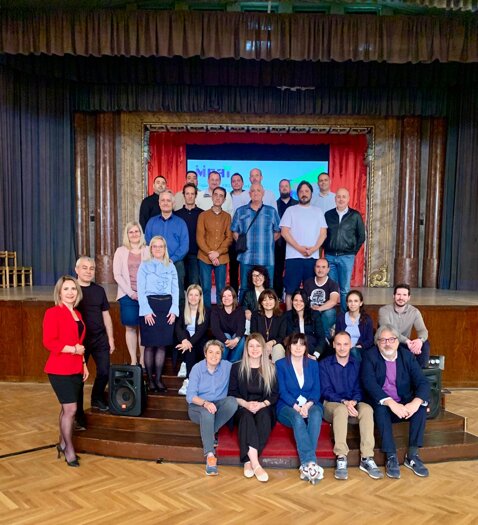
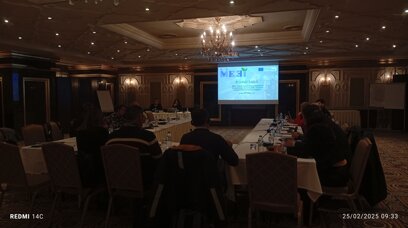
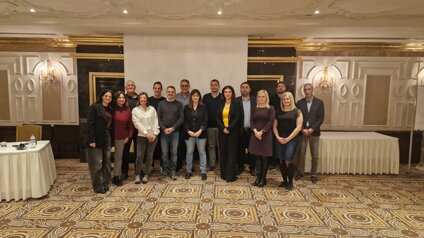
The last MEET project meeting was held in Istanbul, marking the second meeting of this initiative. During the event, the regulatory framework and working conditions in Hungary and Turkey were discussed, with a special focus on the ecological transition processes they are facing. Practical experiences from the metal sector in both countries were shared, with presentations dedicated to topics such as electric cars, battery production and hydrogen production. FIM CISL illustrated the different trade union strategies implemented to promote sustainability within companies and in the workplace. At the same time, the CCOO representatives shared their courses of action and experiences in managing the ecological transition in the metalworking sector.The objective of this day was to understand and compare the different national and union realities regarding decarbonisation processes and the adoption of the circular economy, analysing how these are developing in the four countries involved. In addition, the proposal of the "10 Green Rules" was presented, a set of guidelines designed to guide the action of trade unions in the processes of ecological transition, particularly within European Works Councils and multinational companies.
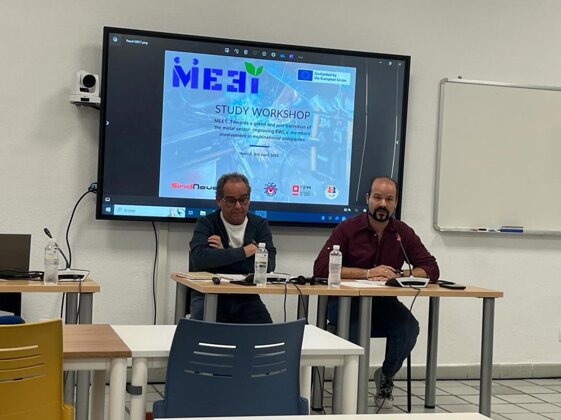
Madrid, April 2024. Workshop
Madrid hosted the first workshop of the MEET project, an initiative aimed at fostering the exchange of knowledge and sharing of good practices in the fields of sustainability, circular economy and just transition. The aim is to support and encourage the participation of workers and their representatives in the process of anticipating and negotiating change management, as well as in the prevention and resolution of possible company conflicts related to issues such as decarbonisation, transformation of the energy model, circular economy and sustainability. The event was attended by trade union representatives from FIM CISL, CCOO (Spain), Türk Metal Sendikasi (Turkey) and VASAS (Hungary) of metalworkers. During the meeting, representatives from FIM-CISL and CCOO Industria shared experiences and initiatives implemented in their organisations to promote a green and fair transition in the metalworking sector. This exchange of ideas and practices aims to support trade unions in Turkey and Hungary in strengthening the information and consultation rights of workers' representatives in metalworking companies in their respective countries, with a focus on sustainability and just transition.